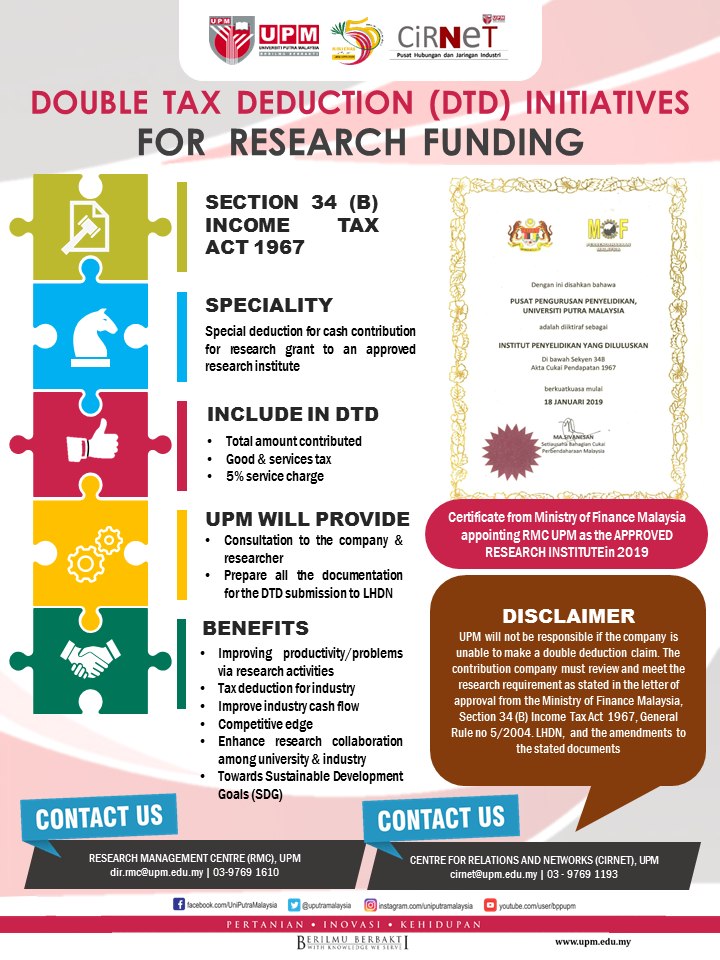

This Double Tax Deduction Initiative is a tax exemption incentive granted to industries/companies that provide funds/cash contributions for research activities/projects or payments for using research services to UPM researchers.
CRITERIA FOR DOUBLE TAX DEDUCTION
The company must be conducting business and registered under the Companies Commission of Malaysia (SSM).
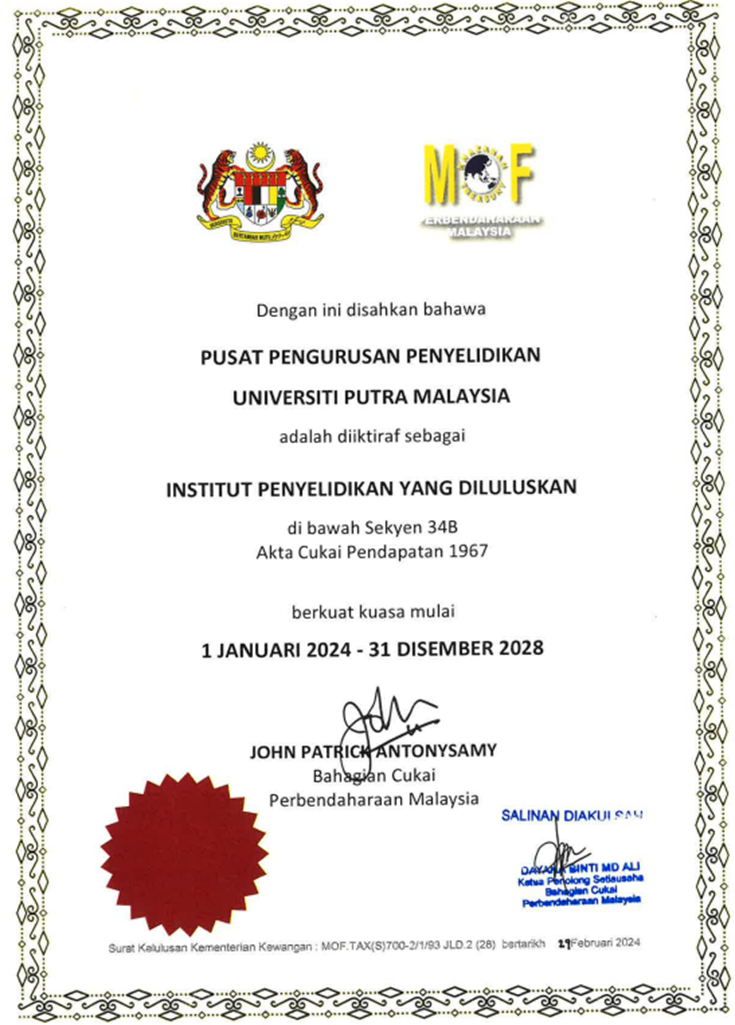
The research services must be obtained from an approved research institute (IPYD) recognized by the relevant Minister.
The funding for R&D activities must come from the company’s business revenue and not from public funds.
The R&D project must be related to the company’s business.
The R&D activities must meet the definition of R&D and eligibility criteria.
Cash contributions must be made without imposing any conditions, or payments must be made for research services to an approved institution (IPYD).
Companies, including those in the service sector, are eligible for the double tax deduction incentive on expenses incurred for R&D activities.
Definition of R&D: R&D refers to systematic or intensive studies in the field of science or technology intending to utilize research outcomes to produce or improve materials, devices, products, outputs, or processes.
R&D Activities That DO NOT Qualify for Double Tax Deduction:
Product quality control or routine testing of materials, devices, products, or outputs
Research in social sciences and humanities
Routine data collection
Efficiency surveys or management studies
Market research or sales promotion
Regular or routine modifications of materials, tools, products, or production methods
Cosmetic modifications or stylistic changes of materials, tools, products, or production methods
ELIGIBLE DTD EXPENSES:
Raw materials
Human resources (e.g., researcher and research assistant allowances, subject to applicable rates)
Technical services (e.g., payments for testing services, data analysis)
Travel costs
Transportation costs
Maintenance costs
Rental expenses
Others (e.g., utilities, printing reports, etc.)
NON-ELIGIBLE DTD EXPENSES:
Capital expenditure (assets and inventory)
Purchases from related subsidiaries
Expenses not related to achieving the R&D project objectives
Expenses related to market research
Expenses related to intellectual property protection (patents, copyrights, etc.)